

Katakana Alphabet for Beginners
If you're a beginner learning Japanese, mastering Katakana is an essential step. It's one of the three main writing systems in Japanese, alongside Hiragana and Kanji. Katakana is especially used for foreign loanwords, brand names, and scientific terminology.
What is Katakana?
Katakana (カタカナ) is a Japanese syllabary system comprising 46 basic characters, just like Hiragana. Each character represents a specific sound or syllable. You'll see Katakana everywhere when reading words like "coffee" (コーヒー), "computer" (コンピューター), or names like "Michael" (マイケル).
Katakana has a distinct angular and sharp appearance, making it easy to distinguish from the more curved Hiragana characters.
Katakana vs. Hiragana: What's the Difference?
While both Hiragana and Katakana represent the same set of sounds (syllables), they serve different purposes:
- Hiragana: Used for native Japanese words and grammatical particles. Characters are rounded and flowing.
- Katakana: Used for foreign loanwords (gairaigo), foreign names, brand names, and emphasis. Characters are angular and sharp.

What is Katakana mainly used for?
Katakana is mainly used to write foreign words and loanwords in Japanese.
In modern Japanese, Katakana is commonly used for:
- Foreign loanwords (English, French, …)
For example: コーヒー (coffee), パソコン (personal computer) - Foreign names and places
For example: マイク (Mike), パリ (Paris) - Scientific and technical terms
- Brand names and product names
- Emphasis (similar to italics or ALL CAPS in English)
Because of this, Katakana often feels modern, sharp, and international compared to Hiragana.
How to Learn and Memorize Katakana Effectively
Here are proven methods to master Katakana quickly:
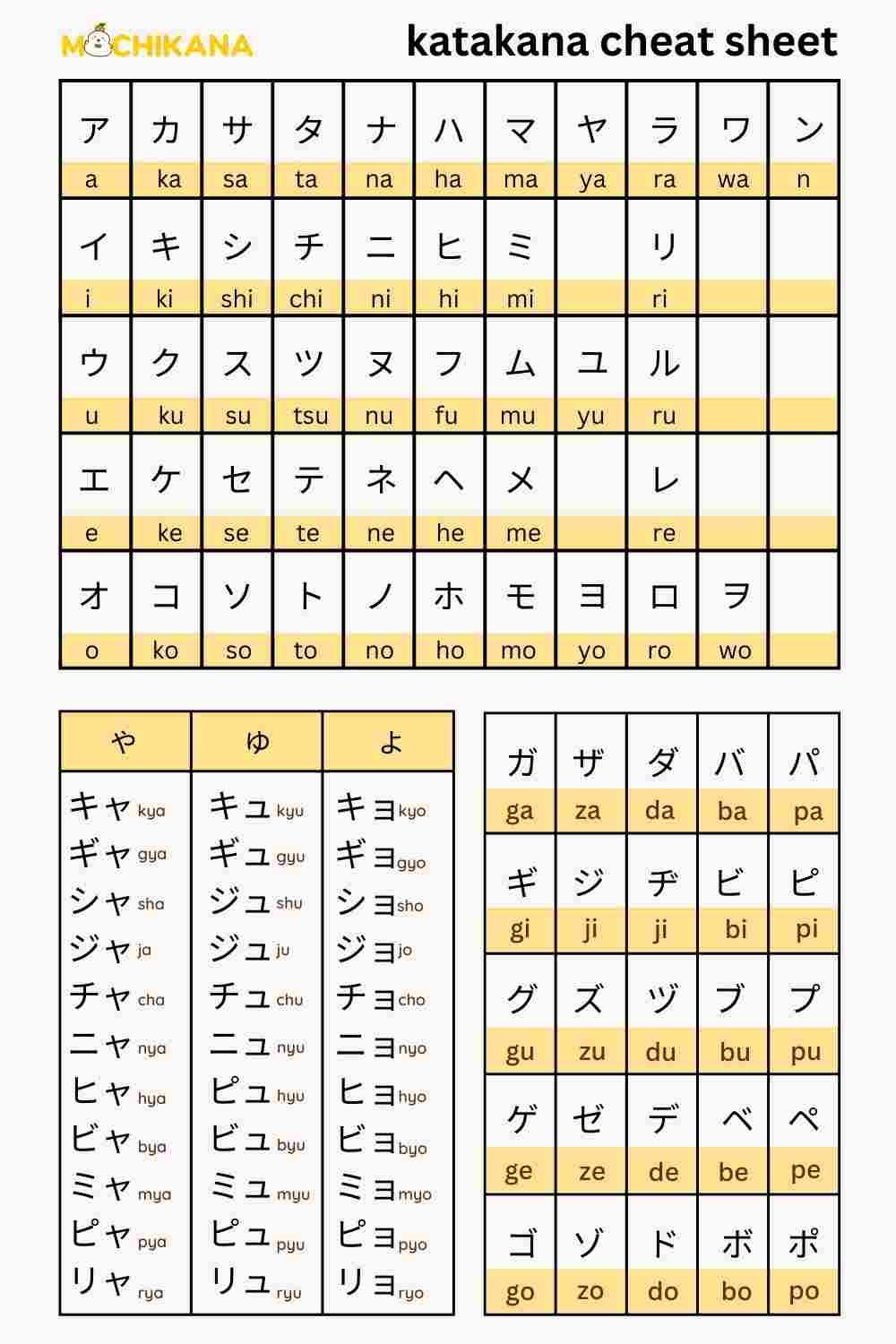
- Use a Katakana Chart: Begin by familiarizing yourself with all characters using a chart. Keep it handy as a reference while practicing.
- Practice Writing by Hand: Writing each character by hand strengthens memory far more than simply looking at the chart. Focus on correct stroke order.
- Use a Katakana Keyboard: Practice typing in Katakana on your computer or phone. It's an excellent way to recognize and use characters in everyday tasks.
- Read and Repeat: Start with simple words and read aloud. Look for Katakana in menus, signs, and product labels.
- Practice with Apps: MochiKana offers interactive lessons, quizzes, and games to help you memorize Katakana quickly. It's perfect for beginners who want to learn at their own pace.
Common words with Katakana
Here are most common Katakana words that beginners often see in everyday Japanese. These are simple, practical, and widely used in daily life, travel, and technology.
| Katakana | Romaji | Meaning |
|---|---|---|
| コーヒー | kōhī | coffee |
| パン | pan | bread |
| テレビ | terebi | television |
| コンピューター | konpyūtā | computer |
| スマホ | sumaho | smartphone |
| レストラン | resutoran | restaurant |
| ホテル | hoteru | hotel |
| バス | basu | bus |
| タクシー | takushī | taxi |
| カメラ | kamera | camera |
| ミルク | miruku | milk |
| アイス | aisu | ice cream |
| チョコレート | chokorēto | chocolate |
| メニュー | menyū | menu |
| ドア | doa | door |
| ベッド | beddo | bed |
| ノート | nōto | notebook |
| ペン | pen | pen |
| スーパー | sūpā | supermarket |
| アプリ | apuri | app / application |
FAQ
1. Is Hiragana or Katakana easier?
For most learners, Hiragana is easier than Katakana.
The reasons are: Hiragana is learned first, and it is used everywhere in basic sentences. Also, its shapes are more flowing and familiar over time.
However, both systems have the same sounds and the same number of basic characters, so once you know Hiragana, learning Katakana becomes much faster.
2. What is Katakana vs Kanji?
Katakana and Kanji serve very different purposes in Japanese.
Katakana is a phonetic alphabet, meaning each character represents a sound. Once you learn Katakana, you can read almost any Katakana word, even if you don't know its meaning yet.
Kanji, on the other hand, are logographic characters borrowed from Chinese. Each Kanji character carries meaning, not just sound, and a single character can represent an entire idea, object, or action.
It's true that there are thousands of Kanji characters in Japanese, and this can feel overwhelming at first. However, you don't need to learn all of them at once, or even all of them at all.
The good news is that Japanese uses a core set of high-frequency Kanji in daily life. By learning Kanji gradually, starting with the most common ones, you can make steady progress without stress.
Ready to Master Katakana?
Katakana is your gateway to understanding foreign words in Japanese and expanding your vocabulary. By using a Katakana chart, practicing with a keyboard, and using MochiKana, you'll master all 46 characters in no time.
Remember, learning Katakana opens up a whole new world of Japanese vocabulary. Keep practicing every day, and soon you'll be reading and writing Katakana with confidence!