

Japanese Alphabets for beginner
Let's learn Japanese together!
The Japanese alphabet consists of three writing systems: Hiragana, Katakana, and Kanji. Hiragana and Katakana represent sounds, while Kanji characters convey meaning through ideographic characters.
Let's dive in with Hiragana - the very first and easy step for your Japanese alphabet journey!
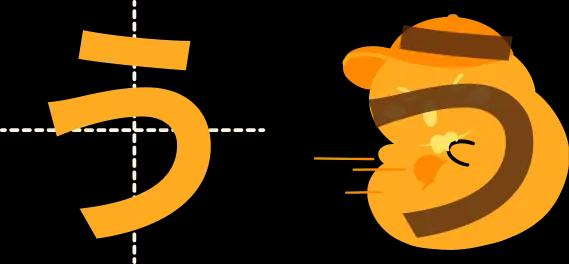
Hiragana is the most fundamental Japanese alphabet, representing the 46 primary sounds used in Japanese.
Or click each character for more information, including pronunciation and stroke order.
あ
a
い
i
う
u
え
e
お
o
か
ka
き
ki
く
ku
け
ke
こ
ko
さ
sa
し
shi
す
su
せ
se
そ
so
た
ta
ち
chi
つ
tsu
て
te
と
to
な
na
に
ni
ぬ
nu
ね
ne
の
no
は
ha
ひ
hi
ふ
fu
へ
he
ほ
ho
ま
ma
み
mi
む
mu
め
me
も
mo
や
ya
ゆ
yu
よ
yo
ら
ra
り
ri
る
ru
れ
re
ろ
ro
わ
wa
を
wo
ん
n
Overview of the Japanese Alphabet
The Japanese writing system is not a traditional alphabet like English. Instead, it has four different scripts. Three of which are more common: Hiragana, Katakana and Kanji. The fourth script is Romaji. It’s rarely used, you only see it in Japanese books for foreigners and on keyboards.
The Hiragana is the core writing system, used to write native Japanese words and grammatical elements. Its simple, flowing characters make it easy for beginners to learn. Katakana is for foreign words. Its characters are more angular and distinct, often appearing in menus or advertisements. Kanji consists of characters borrowed from Chinese and represents entire concepts or ideas. It’s the most complex part of Japanese, with thousands of characters.
Together, these systems form the backbone of written Japanese. Each plays a different but complementary role in creating and reading the language.
FAQ
1. What is the ABC's in Japanese?
In the basic Hiragana chart, 46 characters arranged alphabetically are read from left to right, from top to bottom, similar to English. Starting あ (a), い (i), う (u), え (e), お (o); か (ka), き (ki),く (ku), け (ke), こ (ko).
2. Are there 3 Japanese alphabets?
The Japanese alphabet includes three writing systems: Hiragana, Katakana, and Kanji. They all work together to create one complete writing system.
3. How hard is Japanese alphabet?
Hiragana and Katakana are easy to learn, and can usually be mastered in 2 weeks. However, Kanji is more challenging because there are over 2000 Kanji, and each character has complex strokes with multiple meanings.
Want to learn the Japanese alphabet?
Hiragana
Hiragana is the most common type of Japanese alphabet. It’s primarily for native Japanese words and grammatical functions. With cursive and simple characters, Hiragana is much easier to learn and memorize.
Take a look at the Hiragana chart bellow!
With this very first writing system, as a beginner, you will be able to get to know all the basics: how to read, how to form words from these characters, and also how to write Japanese in a correct order!
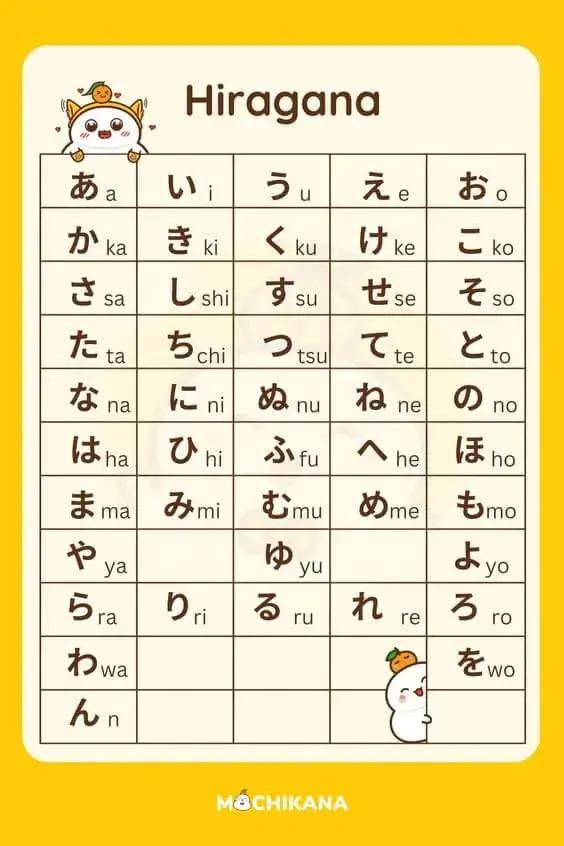
Hiragana basic chart with 46 characters
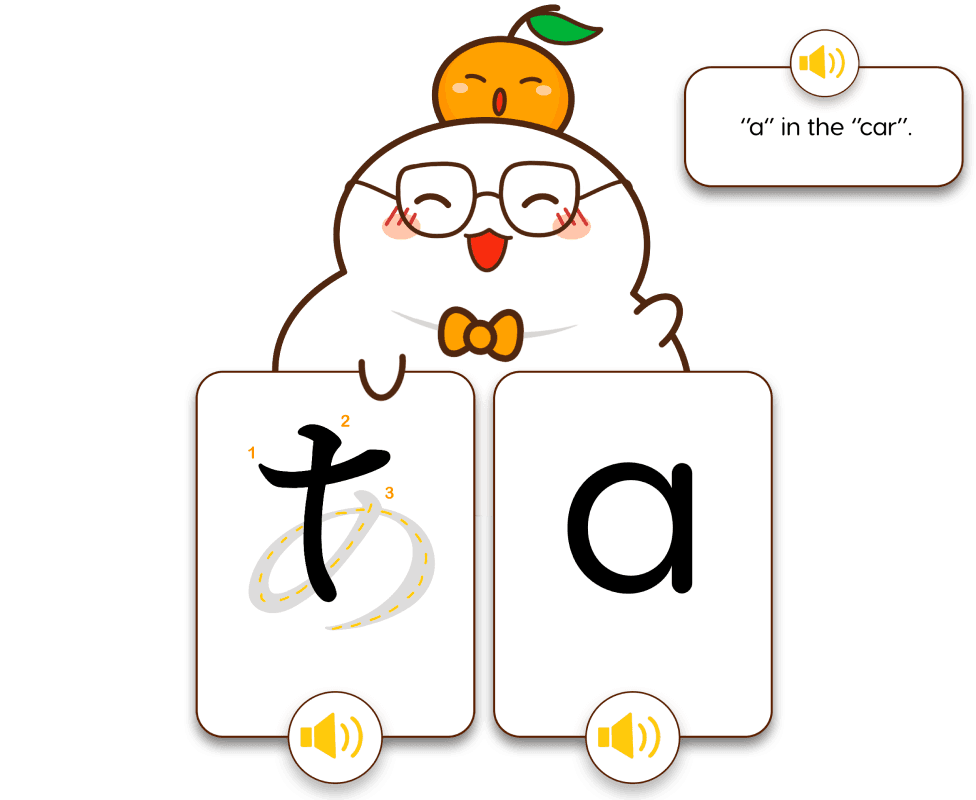
Let's start learning the first Hiragana!
Katakana
The Katakana character set conveniently includes the same sounds as Hiragana. Now you have experience with Hiragana, you come prepared!
Wait... why it looks kind of different?
Well, although they might share the same concept and some identical strokes here and there, Hiragana and Katakana are 2 distinguished writing system and they serve different purposes in Japanese language system. You’ll get to know more when you start learning them!
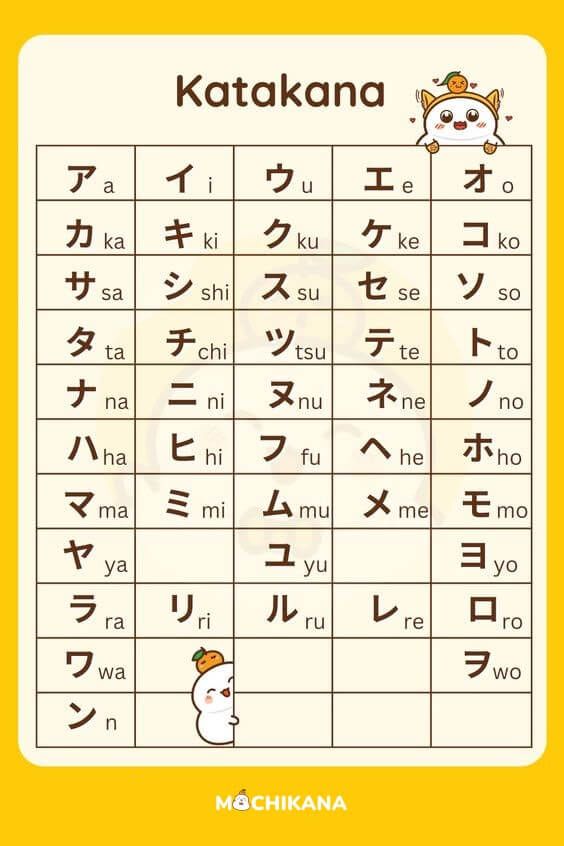
Katakana basic chart with 46 characters
Wait... why it looks kind of different?
With this very first writing system, you will be able to get to know all the basics: how to read, how to pronounce accurately, how to form words from these characters, and also how to write them in a correct order!
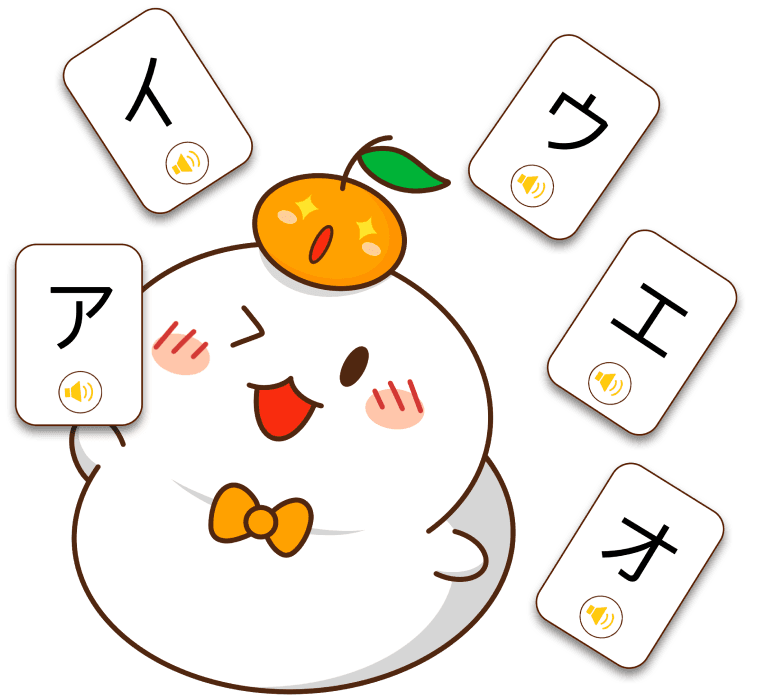
Decided to master both Hiragana and Katakana?
How to remember Hiragana and Katakana better?
Writing down the letters a couple of times helps us memorize them better than just reading them out loud. In MochiKana, you can practice writing all basic Kana in Japanese alphabets. Each Kana has multiple step by step writing games that help you memorize the order of Kana strokes fast and effectively. Let's try this out!
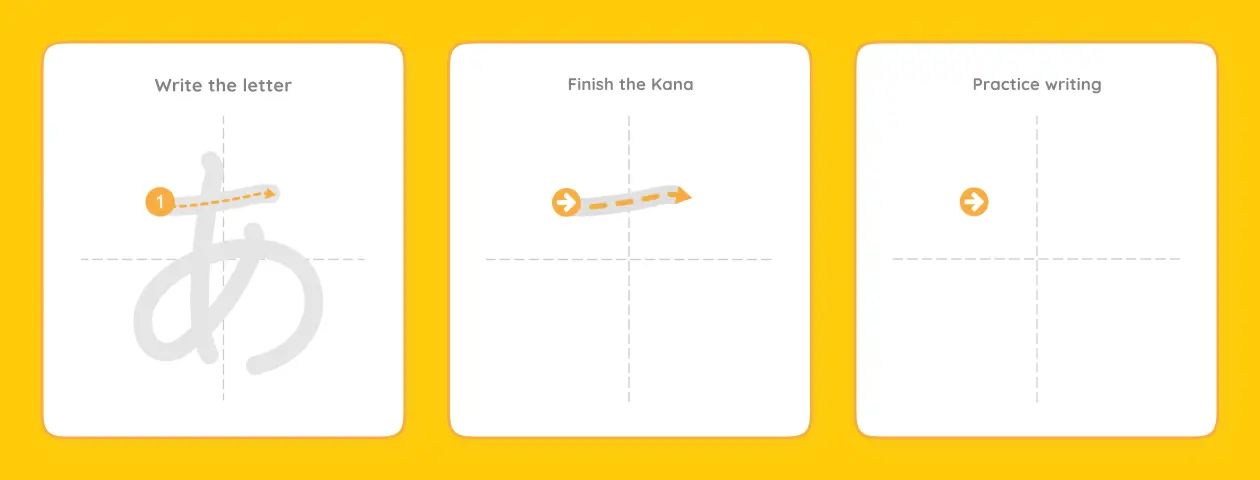
Multiple step by step writing games
Now that you’re familiar with some Japanese writing systems, here’s a table summarizing the differences between Hiragana, Katakana, Kanji, and Romaji writing styles.
| Script | Appearance | Represent | Function | Example |
|---|---|---|---|---|
| Hiragana | Flowing and round-shaped | Syllables | Native words, grammatical elements | あき |
| Katakana | Angular, with more straight lines | Syllables | Loan words, onomatopoeic sounds, foreign names | アキ |
| Kanji | Complicated with a lot of strokes | Concepts, ideas, image | convey meaning concisely in texts | 秋 |
| Romaji | Just Latin characters | Syllables | Use on keyboard, to teach foreigners Japanese | aki |
Kanji
Kanji, on the other hand, is a totally different story. Unlike Hiragana and Katakana, which only contains 46 basic letters each, there are more than 2,000 common Kanji for Japanese learners to master in order to use Japanese like a native speaker.
The way learners comprehend Kanji is also completely different from the rest 2 writing systems, so Kanji is undoubtedly one of the challenges for Japanese language learners.

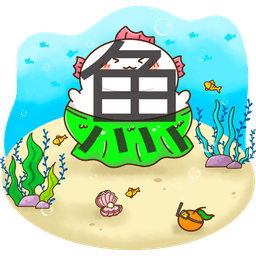
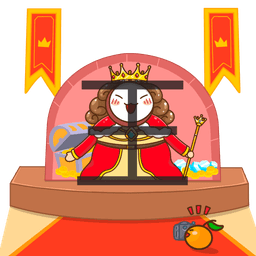
How to learn Kanji effectively
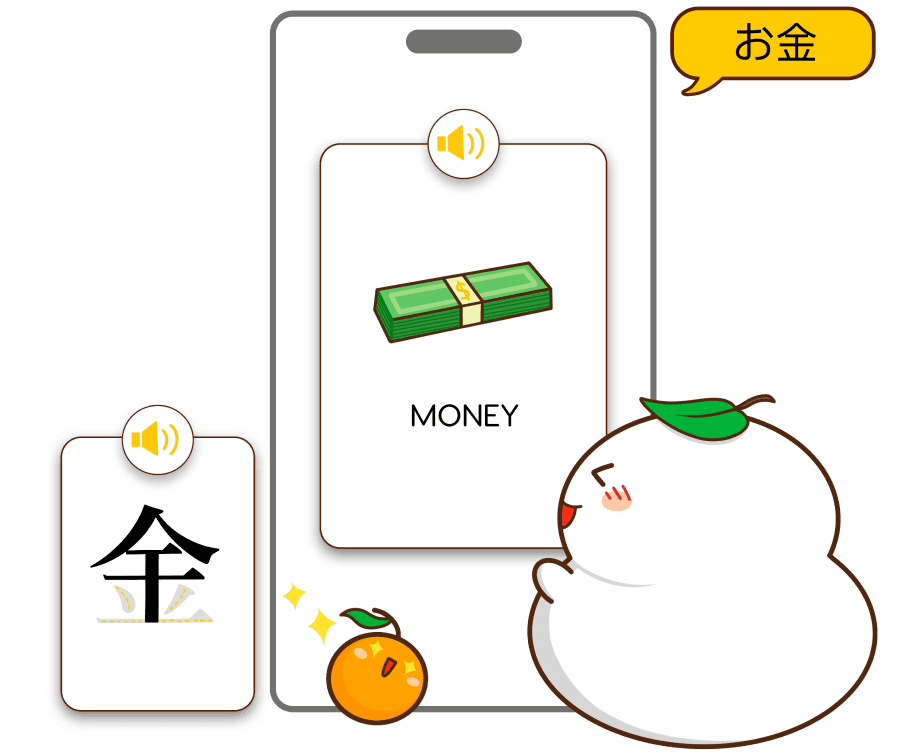
Learn Kanji along with vocabulary
There’s a common misunderstanding that Kanji is a separate part of Japanese alongside vocabulary and grammar. No, it’s not. Kanji is basically the written form of words, and it only makes sense to learn them in the context of a word, not in a vacuum.
Use Spaced Repetition to learn Kanji and vocabulary
Spaced Repetition is not a new technique to remember things. The whole idea is to review what you’ve learned when your brain is about to forget. By learning at that specific moment, you can improve your memory by ten times.
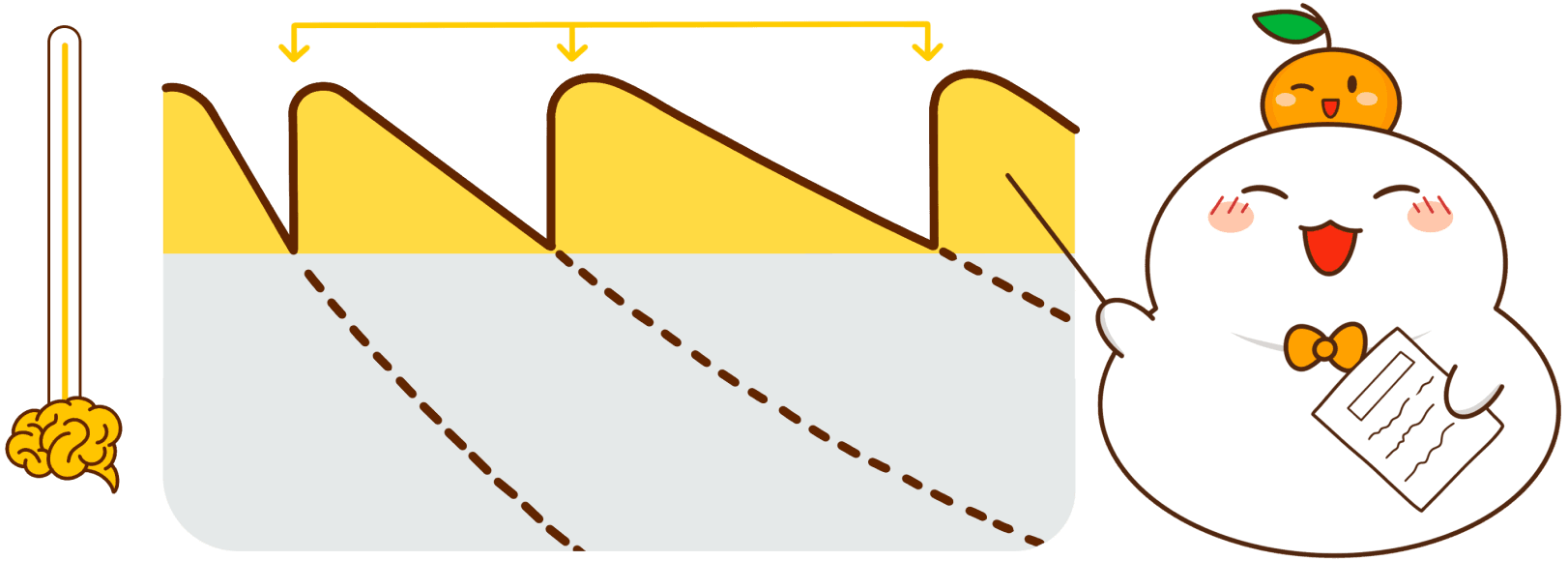
But calculating the perfect time to review is not that easy
Looks like a bite of more than you can chew? don’t worry, you just need to start with the basic first, be patient, take your time, have a method and you can master all of these in no time!